12:00-1:15 Friday, May 8 Friday Lunch Business Meeting
Richard Callaghan had a few parting words before handing the reigns to his successor, Susan McAlister. Richard thanked everyone for making a difficult year more tolerable and manageable. Richard also thanked the MLA planning committee for all their hard work. Special thanks was given to Michael Colford, Gianna Gifford and Ellen Keane. It is evident from everyone at the conference that their hard work is more than greatly appreciated. I, too, would like to thank them for all their hard work in putting together a successful and meaningful conference. Richard talked about his agenda for the past year. Last summer Richard devised his agenda before he quickly realized the agenda was already set for him. Richard recalled the battle with question #1 (remember it?!) Relive the challenge here. A large groan gave way through the dining room in recognition of the challenges of the ballot proposal. If question 1 wasn’t enough, Richard reminded us of the challenges faced by the tanking economy.
Nora Blake stepped to the lectern to offer her thanks for being allowed to serve as Treasurer for the past year. She enjoyed every moment of it and hoped she could be of service again at some point in the near future.
Gerry Deyermond highlighted the success of the paralibrian programs, including workshops sponsored by the Paralibrian Section, such as “Manage Up!”
Robert Maier, MBLC Rep., stepped to the lectern to offer his many thanks, including special thanks to Richard for reminding us all of the challenges of question 1 and battling an ailing economy. Rob also thanked libraries around the state for their hard work and encouraged all to be vigilant of the challenges to come over the next year. In preparation, Rob encouraged all to be active advocates for their library and community.
Richard took the helm for one final stand (Richard’s last stand). Richard presented Susan with a gavel and stepped aside while Susan offered her promise to let us all finish our lunch and enjoy the great weather. (btw, the chicken was excellent!)
Showing posts with label Zach N. Show all posts
Showing posts with label Zach N. Show all posts
Saturday, May 9, 2009

Friday, May 8, 2009
Getting Rid of the Reference Desk
10:45-12:00 Friday, May 8 Getting Rid of the Reference Desk
Speakers: Kate Sheehan, Head of knowledge and Innovation Innovation Services, Darien Library; Gretchen Hams, Head of Children’s Services Darien Library; Frank Baudino, Head of Information Services, Northwest Missouri State University; Lori Mardis, Information Librarian, Owens Library, Northwest Missouri State University
Frank Baudino, Head of Information Services, Northwest Missouri State University; Lori Mardis, Information Librarian, Owens Library, Northwest Missouri State University
Many libraries are considering getting rid of the reference desk. This is coming full circle here at the conference. This workshop reminds me of Scott Bennett's "History of paradigm change." The idea of eliminating the reference desk meshes with the theme of reconfiguring the way we think about the library and the way we think about the idea of library as service. Salem State College has tossed around this idea while working with architects on the design of our new library. With more academic libraries considering the information commons, a change in reference services seems to make sense. Let's see what our speakers have to say about it.
Check out the "Getting Rid of the Reference Desk" presentation here: Owens Library Presentations
Frank Baudino thinks of getting rid of the reference desk as another arm of instruction at the library. Frank cites a decline in reference questions as part of the rationale for getting rid of the reference desk. Frank felt that there was a need to roll with current trends. If there was a decline in reference questions, the librarians clearly were not offering the service they were capable of offering. At the same time as a decline in reference questions, there was a steady increase in the demand for library instruction, a demand for online library instruction, and an increase in the use of library web pages. Frank stresses that it takes a lot of work to develop relationships with faculty, to assist in instruction initiatives with faculty, and to have time to perform all the other duties required of an information/instruction librarian.
Frank cites statistics that showed an increase in the use of the library web page as part of the rationale for a new model. This became an opportunity to target these web-based users. Frank also cited the loss of a professional librarian position (a position the library never got back), which taxed staffing. An increase in web page use (resulting in loss of foot traffic to the reference desk), loss of staffing, and an increase in the number of instruction classes facilitated a shift in the way traditional reference was viewed. These observations are neither good nor bad--it is what it is (thanks BB--go Pats!).
Frank explains that his library (Northwest Missouri State University Library) had paraprofessionals working at the reference desk. If students needed additional in-depth research help, the paraprofessionals would refer the student to the on-call professional librarian.
Some of the things Frank's library was considering was a change of signage to support the reference scheme they were devising. Frank also talked about the desire to market the reference consultation model (more to come from Lori). Frank says his library never followed the chat reference model, but looked toward other areas to supplement the loss of the traditional reference desk.
Frank explains that his library finally settled on the one-stop-shopping model. I like one-stop-shopping, but what exactly does this mean for the library? Keep reading!
Most of the reference librarians were for doing something different. The trouble was getting personnel in other areas on board with the new reference model. Frank developed a task force with librarians and support staff in order to look at the problem. The task force felt that reference should be offered in some way. There needed to be a way to train students, devise appropriate hours for service. There was also a a logistical recasting of how staff would refer in-depth questions to professional librarians for consultations.
Enter Lori.
Lori explains that the reference desk was merged with the circulation desk to create a Library services desk. The library settled on a model that used students and paraprofessionals at the Library Service Desk. the students and paraprofessionals were trained to identify when a professional librarian should be consulted. Generally speaking, Lori says anything beyond ready reference requires consultation. The professional librarians carried hand talkies (whatever they might be called) to communicate with service desk staff.
Lori says that the staff at the Library Services Desk (a combination of the traditional circulation desk and ready reference desk) was encouraged to have a discussion about the question to decide whether to send the student to a professional librarian. Part of the discussion takes place between paraprofessional staff and students at the desk and the professional librarian. Lori says her library uses walkie-talkies. Lori says she takes the walkie-talkie around with her. If Lori is contacted via talkie at an inappropriate time (during a meeting), she can defer the "call" to another professional librarian. I am a little weary about the talkie. Lori explains that the professional librarians are only on call for three hour intervals (part of a rotation) and not on-call after hours except by choice.
Lori says the librarians put the web page to good use by developing an in-house "Ask A Librarian" feature on their website with links to all of the librarian's photos and job titles. This encourages students to contact a librarian they might have worked with in the past. Take a look at the library website here: B.D. Owens Library
The library web page was reconfigured to reflect the new reference model. There was an increase in tutorials and a concentration on each subject area to help students (not coming to a reference desk) to better find what they are looking for.
Because the librarians were not sitting at a reference desk, they were able to concentrate on planning and developing other initiatives, most notably their work on instruction classes. Spending more time on planning instruction classes led to more comprehensive and in-depth consultations with students--and faculty; the quality of service increased exponentially.
A couple of quick questions asked at the lecture:
Why not pursue chat?
An audience member asked why they did not explore chat reference and Lori explained that chat would still mean being tied to the desk and would defeat the point of re-purposing the new reference model.
How many librarians do you have?
7
Is that a large number?
No. We need the extra staff for subject areas.
How do you analyze the traffic to your subject guides posted on the library web-page?
We use google analytics. Otherwise we get feedback from students and faculty after presenting the sites in classes.
e-mail Lori and Frank with additional questions: lmardis@nwmissouri.edu; baudino@nwmissouri.edu
Speakers: Kate Sheehan, Head of knowledge and Innovation Innovation Services, Darien Library; Gretchen Hams, Head of Children’s Services Darien Library; Frank Baudino, Head of Information Services, Northwest Missouri State University; Lori Mardis, Information Librarian, Owens Library, Northwest Missouri State University
Frank Baudino, Head of Information Services, Northwest Missouri State University; Lori Mardis, Information Librarian, Owens Library, Northwest Missouri State University
Many libraries are considering getting rid of the reference desk. This is coming full circle here at the conference. This workshop reminds me of Scott Bennett's "History of paradigm change." The idea of eliminating the reference desk meshes with the theme of reconfiguring the way we think about the library and the way we think about the idea of library as service. Salem State College has tossed around this idea while working with architects on the design of our new library. With more academic libraries considering the information commons, a change in reference services seems to make sense. Let's see what our speakers have to say about it.
Check out the "Getting Rid of the Reference Desk" presentation here: Owens Library Presentations
Frank Baudino thinks of getting rid of the reference desk as another arm of instruction at the library. Frank cites a decline in reference questions as part of the rationale for getting rid of the reference desk. Frank felt that there was a need to roll with current trends. If there was a decline in reference questions, the librarians clearly were not offering the service they were capable of offering. At the same time as a decline in reference questions, there was a steady increase in the demand for library instruction, a demand for online library instruction, and an increase in the use of library web pages. Frank stresses that it takes a lot of work to develop relationships with faculty, to assist in instruction initiatives with faculty, and to have time to perform all the other duties required of an information/instruction librarian.
Frank cites statistics that showed an increase in the use of the library web page as part of the rationale for a new model. This became an opportunity to target these web-based users. Frank also cited the loss of a professional librarian position (a position the library never got back), which taxed staffing. An increase in web page use (resulting in loss of foot traffic to the reference desk), loss of staffing, and an increase in the number of instruction classes facilitated a shift in the way traditional reference was viewed. These observations are neither good nor bad--it is what it is (thanks BB--go Pats!).
Frank explains that his library (Northwest Missouri State University Library) had paraprofessionals working at the reference desk. If students needed additional in-depth research help, the paraprofessionals would refer the student to the on-call professional librarian.
Some of the things Frank's library was considering was a change of signage to support the reference scheme they were devising. Frank also talked about the desire to market the reference consultation model (more to come from Lori). Frank says his library never followed the chat reference model, but looked toward other areas to supplement the loss of the traditional reference desk.
Frank explains that his library finally settled on the one-stop-shopping model. I like one-stop-shopping, but what exactly does this mean for the library? Keep reading!
Most of the reference librarians were for doing something different. The trouble was getting personnel in other areas on board with the new reference model. Frank developed a task force with librarians and support staff in order to look at the problem. The task force felt that reference should be offered in some way. There needed to be a way to train students, devise appropriate hours for service. There was also a a logistical recasting of how staff would refer in-depth questions to professional librarians for consultations.
Enter Lori.
Lori explains that the reference desk was merged with the circulation desk to create a Library services desk. The library settled on a model that used students and paraprofessionals at the Library Service Desk. the students and paraprofessionals were trained to identify when a professional librarian should be consulted. Generally speaking, Lori says anything beyond ready reference requires consultation. The professional librarians carried hand talkies (whatever they might be called) to communicate with service desk staff.
Lori says that the staff at the Library Services Desk (a combination of the traditional circulation desk and ready reference desk) was encouraged to have a discussion about the question to decide whether to send the student to a professional librarian. Part of the discussion takes place between paraprofessional staff and students at the desk and the professional librarian. Lori says her library uses walkie-talkies. Lori says she takes the walkie-talkie around with her. If Lori is contacted via talkie at an inappropriate time (during a meeting), she can defer the "call" to another professional librarian. I am a little weary about the talkie. Lori explains that the professional librarians are only on call for three hour intervals (part of a rotation) and not on-call after hours except by choice.
Lori says the librarians put the web page to good use by developing an in-house "Ask A Librarian" feature on their website with links to all of the librarian's photos and job titles. This encourages students to contact a librarian they might have worked with in the past. Take a look at the library website here: B.D. Owens Library
The library web page was reconfigured to reflect the new reference model. There was an increase in tutorials and a concentration on each subject area to help students (not coming to a reference desk) to better find what they are looking for.
Because the librarians were not sitting at a reference desk, they were able to concentrate on planning and developing other initiatives, most notably their work on instruction classes. Spending more time on planning instruction classes led to more comprehensive and in-depth consultations with students--and faculty; the quality of service increased exponentially.
A couple of quick questions asked at the lecture:
Why not pursue chat?
An audience member asked why they did not explore chat reference and Lori explained that chat would still mean being tied to the desk and would defeat the point of re-purposing the new reference model.
How many librarians do you have?
7
Is that a large number?
No. We need the extra staff for subject areas.
How do you analyze the traffic to your subject guides posted on the library web-page?
We use google analytics. Otherwise we get feedback from students and faculty after presenting the sites in classes.
e-mail Lori and Frank with additional questions: lmardis@nwmissouri.edu; baudino@nwmissouri.edu
Beyond the Book: Voice of Audiobooks
8:30-9:45 Friday, May 8 Beyond the Book: Voice of Audiobooks
Speakers: Mary Burkey, Teacher-Librarian, Olentangy Liberty School District, Columbus, Ohio; Johnny Heller, Narrator, Recorded Books
Mary Burkey, Teacher-Librarian, Olentangy Liberty School District, Columbus, Ohio
I'm a big fan of audiobooks. I usually hit the audiobook section first at my local library. I am eager to hear about the voice behind the books. Mary gives some background information. With all due respect to Mary, we are really waiting to hear the voice and passion behind audiobooks--Johnny Heller. Read on!
Mary Burkey began by exclaiming that she is an audiobook evangelist. Audio literature has its roots in oral storytelling. Mary talks about the stigma of listening to audiobooks. Many believe audiobooks are for those who can't handle the real thing.
Mary has a blog: http://audiobooker.booklistonline.com where she often highlights free downloads. Right now you can get "Pendragon" for free.
Why do we listen to audiobooks? We love to hear the story. Many parents think kids are cheating by listening to the audiobook version. Mary says there are now workbooks that accompany the audiobook. Kids must be actively listening. There is still a strong language component that Mary says helps with language development and vocabulary. Audiobooks helps Mary with her speech.
Mary also talks about how easy it is for her to listen to audiobooks while being very active. She explains that people she knows use audiobooks when they are exercising or playing video games. Learning how to listen is an art, and even while listening on the move, listening slows down, too.
The interpretation of the book is enhanced. Mary remembers details of listening to audiobooks, even details such as where she was and if in her car, where her car was located. Listening has great power. Even NPR understands this, as evident in "Driveway Moments", a collection of captivating stories. Who among us can honestly say they have never been captivated by the telling of a story.
Booklist, booklinks (school setting), horn book (small but good section), audiofile magazine (online at www.audiofilemagazine.com) offers great reviews and listings of audiobooks.
Johnny Heller, Narrator, Recorded Books
Johnny is currently working on a young adult book. He is, evidently, something of a stand-up comedian. If you have never listened to Johnny narrate a book, you should check one out. I cannot do justice to the power of his voice in dictating the ebb and flow of a story.
Johnny says that when he reads in the studio, he reads from xerox copies, not the book. Johnny also saves parts of the copies that offer a great opportunity to read to audiences such as ours. Johnny read excerpts from a children's book, a YA book, and an adult book. I must say Johnny's voice is electric! I've listened to him many times on recordings from Recorded Books. Johnny represents one of the main reasons why listening to audiobooks is so fascinating: it can be absolutely entertaining and funny, especially with the acting and inflection of the reader.
Johnny began by reading from "Hey, New Kid!", chapter 2: "Little dork that couldn't." He then read from "Al Capone does my shirts", chapter five, to be exact. He then read an excerpt from "Marley and Me." Marley and Me, Johnny explains, is one of his favorite books. With time left, Johnny decides to read from Dave Barry.
Johnny answered a few questions you might find interesting. He says he reads for three hour stretches in the studio. He explains that it is important for him to read the book first to make sure the voice is correct and pronunciation is observed. Mary jumps in to explain that part of critical listening is to pick up on accents. Johnny does his homework to get some inflection, pronunciation and accents correctly.
Find out more about Johnny Heller here: Johnny Heller
Listen to Johnny at audiofilemagazine
As a special treat Johnny read from "Plato and a Platypus Walk into a Bar." Am I spoiled, or what? What a treat! I couldn't stop laughing!!
Check out the session handout and suggested title lists available online. Here it is again: Audiobook blog
Happy listening audiobook fans!!!
Speakers: Mary Burkey, Teacher-Librarian, Olentangy Liberty School District, Columbus, Ohio; Johnny Heller, Narrator, Recorded Books
Mary Burkey, Teacher-Librarian, Olentangy Liberty School District, Columbus, Ohio
I'm a big fan of audiobooks. I usually hit the audiobook section first at my local library. I am eager to hear about the voice behind the books. Mary gives some background information. With all due respect to Mary, we are really waiting to hear the voice and passion behind audiobooks--Johnny Heller. Read on!
Mary Burkey began by exclaiming that she is an audiobook evangelist. Audio literature has its roots in oral storytelling. Mary talks about the stigma of listening to audiobooks. Many believe audiobooks are for those who can't handle the real thing.
Mary has a blog: http://audiobooker.booklistonline.com where she often highlights free downloads. Right now you can get "Pendragon" for free.
Why do we listen to audiobooks? We love to hear the story. Many parents think kids are cheating by listening to the audiobook version. Mary says there are now workbooks that accompany the audiobook. Kids must be actively listening. There is still a strong language component that Mary says helps with language development and vocabulary. Audiobooks helps Mary with her speech.
Mary also talks about how easy it is for her to listen to audiobooks while being very active. She explains that people she knows use audiobooks when they are exercising or playing video games. Learning how to listen is an art, and even while listening on the move, listening slows down, too.
The interpretation of the book is enhanced. Mary remembers details of listening to audiobooks, even details such as where she was and if in her car, where her car was located. Listening has great power. Even NPR understands this, as evident in "Driveway Moments", a collection of captivating stories. Who among us can honestly say they have never been captivated by the telling of a story.
Booklist, booklinks (school setting), horn book (small but good section), audiofile magazine (online at www.audiofilemagazine.com) offers great reviews and listings of audiobooks.
Johnny Heller, Narrator, Recorded Books
Johnny is currently working on a young adult book. He is, evidently, something of a stand-up comedian. If you have never listened to Johnny narrate a book, you should check one out. I cannot do justice to the power of his voice in dictating the ebb and flow of a story.
Johnny says that when he reads in the studio, he reads from xerox copies, not the book. Johnny also saves parts of the copies that offer a great opportunity to read to audiences such as ours. Johnny read excerpts from a children's book, a YA book, and an adult book. I must say Johnny's voice is electric! I've listened to him many times on recordings from Recorded Books. Johnny represents one of the main reasons why listening to audiobooks is so fascinating: it can be absolutely entertaining and funny, especially with the acting and inflection of the reader.
Johnny began by reading from "Hey, New Kid!", chapter 2: "Little dork that couldn't." He then read from "Al Capone does my shirts", chapter five, to be exact. He then read an excerpt from "Marley and Me." Marley and Me, Johnny explains, is one of his favorite books. With time left, Johnny decides to read from Dave Barry.
Johnny answered a few questions you might find interesting. He says he reads for three hour stretches in the studio. He explains that it is important for him to read the book first to make sure the voice is correct and pronunciation is observed. Mary jumps in to explain that part of critical listening is to pick up on accents. Johnny does his homework to get some inflection, pronunciation and accents correctly.
Find out more about Johnny Heller here: Johnny Heller
Listen to Johnny at audiofilemagazine
As a special treat Johnny read from "Plato and a Platypus Walk into a Bar." Am I spoiled, or what? What a treat! I couldn't stop laughing!!
Check out the session handout and suggested title lists available online. Here it is again: Audiobook blog
Happy listening audiobook fans!!!
Thursday, May 7, 2009
Mo Willems
2:00-3:15 Mo Willems
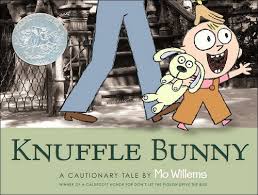
Speaker: #1 New York Times Bestselling author and illustrator Mo Willems is best known for his Caldecott Honor winning picture books Don’t Let the Pigeon Drive the Bus!, Knuffle Bunny: A Cautionary Tale, and Knuffle Bunny Too: A Case of Mistaken Identity.
Mo Willems Homepage
The Mo I did not know . . .Mo was a writer for Sesame Street and won 6 Emmys. Mo is also working on a musical based on his Knuffle Bunny book. Mo, a rather dynamic speaker, started his lecture with a story. Mo did a rendition of the three little pigs. Mo stated at the end that he would never create a book around the three pigs story. The audience must create the meaning of his story.
Mo says that for a picture book to be successful it must be incomprehensible. With the three little pigs, everyone can picture what will happen and has preconceived notions of the story. Mo mixed up the story and the ending, but makes the point that he wants everyone to get out of his picture books what they want to get out of it.
Mo talks about readers not wanting a relationship with the author, but a relationship with the characters. Mo wants to make sure he is not present in the story. He wants to create an emotional placement with the characters, as in "Where the Wild Things Are" the reader does not notice the characters getting larger and larger. If you do notice, the author/illustrator has failed.
Mo also talks about manipulating the reader into the rhythm of the story by playing with the words and the length of the phrasing on each page. Mo leads into a discussion about one of the rules for his books: all of his books must have characters that can be drawn by a five year old. Mo wants children to feel like they can infringe on his copyright. Mo takes a moment to pass out paper to the audience to practice drawing like a five year old using basic shapes and concepts. Mo even makes "kiddy" noises while he draws indicating how much fun he is having, "honk, honk!" Mo draws a pigeon with everyone in the audience, imploring all to show him their picture. Mo points out the fact that every pigeon is different. Mo talks about the traditions of cartooning as a combination of English and American caricature and Japanese calligraphy.
One member of the audience asked how Mo came up with the name von hooby dooby. Mo uses the phrase for things he forgets.
Mo reflects on his third grade art teacher who threw all of his drawings away. When Mo went to high school his third grade teacher had taken a job at the high school, so Mo never took another art class. Mo got a Bachelors degree in film, but tells all that anyone can become an illustrator: it is the desire that is most important of all.
Mo explains that he got his first book published in 5 years—it was rejected by 74 million publishers. All the publishers said the book was unusual. The last publisher thought the books unusual nature was a good thing and decided to publish it. Don’t worry about getting published, work on being superlative and someone will find you.
One of the most intriguing stories Mo relates is when he was a child he wrote a letter to Charles Schulz asking if he could have his job when he dies. Mo waited for years for a response, until not long ago Charles Schulz passed away. Mo was talking to his father and mentioned, "Remember when I wrote that letter to Charles Schulz?" Mo's father responded, "Yeah, we should have sent that letter." Mo relates that it is a very Charlie Brown moment. Mo, of course, thought the letter had been sent and was disappointed to learn he waited for naught.
Mo ends his talk with the world's worst poem. Mo does a lot of traveling and reflected on a lousy ditty in the bathroom of a hotel that communicates the power of the word, however bad, even the word discourages the stealing of towels.
Here is a blog of some of Mo's doodlings: Doodle blog
Manage Up!
11:30-12:45 Thursday, May 7, 2009 Manage Up!
Speaker: Diane Young, Library Consultant (Itinerant Librarian for the Mass Lib Association)
Diane offers an interactive workshop on how to manage your boss, or rather, how to convince your boss to say yes. There is always a superior and a subordinate. The superior, however, always has the upper hand. Even if you have a really great boss, you will always hit a wall in getting what you want/need. Diane stresses that every human being is fallible. Diane states that there are 8 things/steps to consider in communicating with your boss. Diane created an acronym--"INTREPID"--but it does not quite translate below as she lists the points out of order.
1. Issues
What are your boss's favorite issues? What is your boss excited about? What is it that your boss talks about or is passionate about? Diane opened this question up to the audience. Responses included furniture, degrees, databases and workshops. How do we know what our boss is interested in? The audience stated that they talk to co-workers, talked to their boss at meetings, saw initiatives their boss was working on.
2. Pressures
What are the pressures on your boss? Some responses include budgeting challenges, negotiating licensing with vendors, personality conflicts and faculty relationships.
3. Ramifications
How does your idea affect other divisions? The budget? The customers?
On member of the audience talked about her trouble in getting new stacks for the children's room. She is conscious of taking money away from others. She sees the problem: the stacks are dangerous, when will they be fixed. Another audience member discussed the challenges of getting a wiki for the children's room to document schedules and usage.
4. Non-threatening
How can you make your idea non-threatening? Incremental? No cost? Can you do it for a trial without including a cost? Diane thinks this is pretty straightforward. The problem, as one audeience member states, is that many people find any idea that is different as threatening.
5. Dignity
How will you respect your boss's dignity? How can you make your boss look good and feel good? Be mindful of your boss's image and feelings. Diane suggests that it wouldn't hurt to appear deferential by considering how a proposal or idea could help your boss's image
6. Empathy
The operative word is empathy. Praise upward. Diane uses the example of your boss laying off a staff member and acknowledging the difficulty of the situation. Empathy makes your boss listen, too.
7. Information
How does your boss like to receive information? Diane had a boss who interpreted Meyers-Briggs test results to effectively communicate with staff, respecting the way staff wanted to interact based on the Meyers-Briggs test results.
Diane also urges us to understand if our boss is a detail-oriented person or a big-picture oriented person.
8. Timing
Is your boss casual or strict about his time used? So how should you use time communicating your idea? This sort of falls under Information and the way your boss would like to communicate.
Diane then issues an assignment and gets the room to break down into different groups. Given an idea, a boss's issue, pressure, and preference for communication and timing, Diane invites groups to consider what they will say. What medium will each group use to convey the message? When will each group say it?
Each group presented one or two clever things they would say to their boss. One group proposed dropping the idea like a bombshell and letting their boss think about it for awhile before coming back to it.
Another group proposed the use of a wiki as being able to better serve the community to align with their boss's interest in serving the community. Another group made a case for allowing beverages in the library to minimize staffing problems at the circulation desk because there is less policing and more attention at the desk. Such a proposal would capitalize on their boss's predilection for organization and simple solutions.
Diane, of course, says to think before you leap. I guess we should add that it is important think about your boss before you leap. Maybe you can just try leaping on your boss--figuratively speaking. Give it a try!
Speaker: Diane Young, Library Consultant (Itinerant Librarian for the Mass Lib Association)
Diane offers an interactive workshop on how to manage your boss, or rather, how to convince your boss to say yes. There is always a superior and a subordinate. The superior, however, always has the upper hand. Even if you have a really great boss, you will always hit a wall in getting what you want/need. Diane stresses that every human being is fallible. Diane states that there are 8 things/steps to consider in communicating with your boss. Diane created an acronym--"INTREPID"--but it does not quite translate below as she lists the points out of order.
1. Issues
What are your boss's favorite issues? What is your boss excited about? What is it that your boss talks about or is passionate about? Diane opened this question up to the audience. Responses included furniture, degrees, databases and workshops. How do we know what our boss is interested in? The audience stated that they talk to co-workers, talked to their boss at meetings, saw initiatives their boss was working on.
2. Pressures
What are the pressures on your boss? Some responses include budgeting challenges, negotiating licensing with vendors, personality conflicts and faculty relationships.
3. Ramifications
How does your idea affect other divisions? The budget? The customers?
On member of the audience talked about her trouble in getting new stacks for the children's room. She is conscious of taking money away from others. She sees the problem: the stacks are dangerous, when will they be fixed. Another audience member discussed the challenges of getting a wiki for the children's room to document schedules and usage.
4. Non-threatening
How can you make your idea non-threatening? Incremental? No cost? Can you do it for a trial without including a cost? Diane thinks this is pretty straightforward. The problem, as one audeience member states, is that many people find any idea that is different as threatening.
5. Dignity
How will you respect your boss's dignity? How can you make your boss look good and feel good? Be mindful of your boss's image and feelings. Diane suggests that it wouldn't hurt to appear deferential by considering how a proposal or idea could help your boss's image
6. Empathy
The operative word is empathy. Praise upward. Diane uses the example of your boss laying off a staff member and acknowledging the difficulty of the situation. Empathy makes your boss listen, too.
7. Information
How does your boss like to receive information? Diane had a boss who interpreted Meyers-Briggs test results to effectively communicate with staff, respecting the way staff wanted to interact based on the Meyers-Briggs test results.
Diane also urges us to understand if our boss is a detail-oriented person or a big-picture oriented person.
8. Timing
Is your boss casual or strict about his time used? So how should you use time communicating your idea? This sort of falls under Information and the way your boss would like to communicate.
Diane then issues an assignment and gets the room to break down into different groups. Given an idea, a boss's issue, pressure, and preference for communication and timing, Diane invites groups to consider what they will say. What medium will each group use to convey the message? When will each group say it?
Each group presented one or two clever things they would say to their boss. One group proposed dropping the idea like a bombshell and letting their boss think about it for awhile before coming back to it.
Another group proposed the use of a wiki as being able to better serve the community to align with their boss's interest in serving the community. Another group made a case for allowing beverages in the library to minimize staffing problems at the circulation desk because there is less policing and more attention at the desk. Such a proposal would capitalize on their boss's predilection for organization and simple solutions.
Diane, of course, says to think before you leap. I guess we should add that it is important think about your boss before you leap. Maybe you can just try leaping on your boss--figuratively speaking. Give it a try!
Libraries and Learning: A History of Paradigm Change
9:30-10:45 May 7, 2009 Libraries and Learning: A History of Paradigm Change
Scott Bennett is Yale University Librarian Emeritus. Check out more information at: www.libraryspaceplanning.com
Mr.Bennett began discussing three revolutions in communications technology that have created paradigms in library space. All three dictate paradigms of library design: (1) reader-centered design/paradigm, (2) book centered design/paradigm, and (3)learning-centered paradigm (end of book-centered design).
The reader-centered paradigm can be seen in many traditional libraries that were designed to affirm the unity of readers and books. Books were in close proximity to the reader, and spaces were open and conducive to study and reading. The spaces were not dominated by shelving. see Yale University Library
The book-centered paradigm showcases a library overrun with book stacks, as books were central to the idea of a library building. An example of this is the main library, University of Illinois. Check these out on flickr: Uillinois
Scott talks about the end of the book-centered paradigm (learning-centered paradigm) as informing new library spaces and perhaps a flexible model for design in libraries. The tipping point came in the early 1990s through the early 2000s with the design and introduction of Journal Storage with the likes of JSTOR. With electronic resources came a shift in spatial relationships between students and the library. New study spaces are required and this clearly signaled the end of the book-centered paradigm. This paradigm clearly points to the information commons model. The Vogel Library, Wartburg College employs an information commons, but the planning process asked: what do we want to happen in this building? The answer: "We want to make learning happen." With this answer, the Vogel Library incorporates space on the third floor of the library with no print material, moving away from the model of book-centered design. The idea, as reported by Mr. Bennett, is that studying equates to learning. Learning is controlled, described as a transformative moment in which students WANT to learn. Scott uses the term "metacognition", or the ability to orchestrate ones learning. It is also referred to as "intentional learning." It employs an end rather than a means.
These are certainly lofty goals for a library--designing for intentional learning, as Scott relates. New design has the intention of fostering intentional learning. Autonomous learning has rarely been a goal in designing a new library space. Group study spaces, cafes, learning spaces do not comprise intentional learning spaces. The element of participation and community are required for contributing to the space and the intention of learning.
We need to think like educators rather than like service providers. the book-centered design is geared toward information. We no longer "support" students, but instead actively participate in the education process by making education intentional.
Make the library as a cheap place on campus for students to take control of their learning. Take advantage of the revolutionary moment employing a learning-centered paradigm in which education and learning are intentional, not peripheral. The librarian must not act as supporting architects in assisting the student, but as primary architects in designing the students.
A systematic understanding of learning informs our ideas of design for a library. It is clear that traditional methods of design of space will produce poor returns on investment in physical library space.
To borrow Scott's words from a statement on his website: "I believe that, properly done, library space design situates information in the social context of learning. This synergistic situating of information and learning is the core function of a bricks and mortar library, and it aligns both the library and its building with the basic educational mission of the college or university."
Essentially we are talking about a future of flexibility in library design. It seems that the new model of library design is like technology: it is everywhere and nowhere. In any case, it changes our notions of the way things "should be".
Scott Bennett is Yale University Librarian Emeritus. Check out more information at: www.libraryspaceplanning.com
Mr.Bennett began discussing three revolutions in communications technology that have created paradigms in library space. All three dictate paradigms of library design: (1) reader-centered design/paradigm, (2) book centered design/paradigm, and (3)learning-centered paradigm (end of book-centered design).
The reader-centered paradigm can be seen in many traditional libraries that were designed to affirm the unity of readers and books. Books were in close proximity to the reader, and spaces were open and conducive to study and reading. The spaces were not dominated by shelving. see Yale University Library
The book-centered paradigm showcases a library overrun with book stacks, as books were central to the idea of a library building. An example of this is the main library, University of Illinois. Check these out on flickr: Uillinois
Scott talks about the end of the book-centered paradigm (learning-centered paradigm) as informing new library spaces and perhaps a flexible model for design in libraries. The tipping point came in the early 1990s through the early 2000s with the design and introduction of Journal Storage with the likes of JSTOR. With electronic resources came a shift in spatial relationships between students and the library. New study spaces are required and this clearly signaled the end of the book-centered paradigm. This paradigm clearly points to the information commons model. The Vogel Library, Wartburg College employs an information commons, but the planning process asked: what do we want to happen in this building? The answer: "We want to make learning happen." With this answer, the Vogel Library incorporates space on the third floor of the library with no print material, moving away from the model of book-centered design. The idea, as reported by Mr. Bennett, is that studying equates to learning. Learning is controlled, described as a transformative moment in which students WANT to learn. Scott uses the term "metacognition", or the ability to orchestrate ones learning. It is also referred to as "intentional learning." It employs an end rather than a means.
These are certainly lofty goals for a library--designing for intentional learning, as Scott relates. New design has the intention of fostering intentional learning. Autonomous learning has rarely been a goal in designing a new library space. Group study spaces, cafes, learning spaces do not comprise intentional learning spaces. The element of participation and community are required for contributing to the space and the intention of learning.
We need to think like educators rather than like service providers. the book-centered design is geared toward information. We no longer "support" students, but instead actively participate in the education process by making education intentional.
Make the library as a cheap place on campus for students to take control of their learning. Take advantage of the revolutionary moment employing a learning-centered paradigm in which education and learning are intentional, not peripheral. The librarian must not act as supporting architects in assisting the student, but as primary architects in designing the students.
A systematic understanding of learning informs our ideas of design for a library. It is clear that traditional methods of design of space will produce poor returns on investment in physical library space.
To borrow Scott's words from a statement on his website: "I believe that, properly done, library space design situates information in the social context of learning. This synergistic situating of information and learning is the core function of a bricks and mortar library, and it aligns both the library and its building with the basic educational mission of the college or university."
Essentially we are talking about a future of flexibility in library design. It seems that the new model of library design is like technology: it is everywhere and nowhere. In any case, it changes our notions of the way things "should be".
Getting Beyond the Great Idea
8:30-9:30 May 7, 2009 Getting Beyond the Great Idea: Getting Buy-in and Doing Effective Training for New Technology Projects
Speaker: Jenica P. Rogers-Urbanek, Collection Development
Coordinator and Technical Services Team Leader, College Libraries at the State University of New York in
Potsdam
Jenica's title is listed as: librarian, project manager, superhero. She'll probably take over the world someday.
Check out Jenica's blog here: rogersurbanek
Jenica talks about approaching technology in a way that is carefully conceived and proposed to include as many people as possible. It is difficult getting everyone on board with any idea, never mind how difficult it is to get staff to buy-in to new technological initiatives. Jenica talks about the importance of relevancy in getting a project accepted and utilized.
Creativity, spontaneity, individualism, easy information sharing are hallmarks of web 2.0--but all projects need leaders to succeed. Someone has to be the first person to jump off the cliff. Doing it yourself can be really hard. In order to be a leader you have to have a plan. Technology needs a plan to be convincing. Understand why you are doing it--technology project. Look to your mission, know your goals (what are you hoping to achieve), never send out technology looking for a problem. "Everybody has a blog" is looking for a problem. There is no plan inherent in the reason, nor does it create content for the blog. Jenica also advises avoiding the "uncritical Me-Too-ism." Jenica uses the iPhone as an example of wanting technology because they are cool--plays video games. Me-Too-ism means "me too, me too!" The me too attitude will not convince others that they need to get on oard.
Jenica also advises librarians to have a project plan. What duck-like things do you need to line up? Which other people do you need to line up? What support do you need from other ducks? Who do you need to convince and what kind of alliances/collaborations need to be created to make your idea a reality.
To instill confidence in a project, Jenica suggests outlining a (1)plan for success. She then suggests we (2)write down the process for the future, (3)assess the project, and (4)plan for failure. Writing down the project illustrates a seriousness and motivation for pursuing the project in addition to acting as a safeguard if you get sidetracked. Regardless of how prepared you are, with technology--any project for that matter--we must plan for the possibility of failure. There are so many different variables in accounting for success that failure is always a possibility.
However you share your information, avoid "truthiness." (see Stephen Colbert) Have reasonable expectations for participation, look for achievable results and, above all, understand your stakeholders. **Remember, it's about the PEOPLE!
Jenica offers suggestions for understanding stakeholders in the process of the project. She asks, what motivates your stakeholders? Jenica suggests considering Maslow's hierarchy of needs. Consider physiological (breathing and eating), safety (job security), belonging (being part of a community), esteem, and self-actualization (creativity and sense of play) as motivating factors. This could, of course, work as a sense of terror and not help as motivating factors. Does the proposal threaten the sense of community, does the proposal reduce their sense of confidence.
Jenica says that with cautions in mind, it is time to convince people of your project. (1) Focus on your mission, (2) offer them information in a comfortable, effective format, (3) address their expected motivations, and (4) address their expected fears. Be an evangelist, but find a balance between passion, energy and excitement. Don't shriek! If you fail in your pursuits, be humble. You might not be the right voice to speak out. Maybe someone else can articulate the idea better. No one to fold 'em, Jenica says. Use your failure as training. training, Jenica says, is your parachute. Your training is never over. Jenica says that it is not only training for your proposal that is valuable, but the proposed training for any technological initiative to help an initiative get off the ground, especially if people are apprehensive about accepting a proposal. Do a show-and-tell session, do hands on workshops and one-on-one private sessions. Teach by example and ensure that training will not stop after one session.
Jenica also cautions us to provide relevant learning experiences. This applies to any educational experience. This informs the relevancy of training sessions and using effective training tools for training use on wikis, meebo, skype, or a blog. Hands-on learning is effective for students and can certainly be helpful for colleagues and staff. It is also helpful to encourage the value of the product as a work product (makes them effective workers). It is also important to credit staff with success when a project is learned and utilized.
The bottom line is if you want a plan to get off the ground, Jenica continually stresses the importance of relevancy. Be RELEVANT! Relevancy informs the probability of success since this appeals to people's sense of need and want. As a last advice, Jenica says to be a good listener. Pay attention and pick up on the cues. Notice who responds and who doesn't. A good listener is a key to understanding needs, fears, pitfalls, and recipes for success. Good luck!
Speaker: Jenica P. Rogers-Urbanek, Collection Development
Coordinator and Technical Services Team Leader, College Libraries at the State University of New York in
Potsdam
Jenica's title is listed as: librarian, project manager, superhero. She'll probably take over the world someday.
Check out Jenica's blog here: rogersurbanek
Jenica talks about approaching technology in a way that is carefully conceived and proposed to include as many people as possible. It is difficult getting everyone on board with any idea, never mind how difficult it is to get staff to buy-in to new technological initiatives. Jenica talks about the importance of relevancy in getting a project accepted and utilized.
Creativity, spontaneity, individualism, easy information sharing are hallmarks of web 2.0--but all projects need leaders to succeed. Someone has to be the first person to jump off the cliff. Doing it yourself can be really hard. In order to be a leader you have to have a plan. Technology needs a plan to be convincing. Understand why you are doing it--technology project. Look to your mission, know your goals (what are you hoping to achieve), never send out technology looking for a problem. "Everybody has a blog" is looking for a problem. There is no plan inherent in the reason, nor does it create content for the blog. Jenica also advises avoiding the "uncritical Me-Too-ism." Jenica uses the iPhone as an example of wanting technology because they are cool--plays video games. Me-Too-ism means "me too, me too!" The me too attitude will not convince others that they need to get on oard.
Jenica also advises librarians to have a project plan. What duck-like things do you need to line up? Which other people do you need to line up? What support do you need from other ducks? Who do you need to convince and what kind of alliances/collaborations need to be created to make your idea a reality.
To instill confidence in a project, Jenica suggests outlining a (1)plan for success. She then suggests we (2)write down the process for the future, (3)assess the project, and (4)plan for failure. Writing down the project illustrates a seriousness and motivation for pursuing the project in addition to acting as a safeguard if you get sidetracked. Regardless of how prepared you are, with technology--any project for that matter--we must plan for the possibility of failure. There are so many different variables in accounting for success that failure is always a possibility.
However you share your information, avoid "truthiness." (see Stephen Colbert) Have reasonable expectations for participation, look for achievable results and, above all, understand your stakeholders. **Remember, it's about the PEOPLE!
Jenica offers suggestions for understanding stakeholders in the process of the project. She asks, what motivates your stakeholders? Jenica suggests considering Maslow's hierarchy of needs. Consider physiological (breathing and eating), safety (job security), belonging (being part of a community), esteem, and self-actualization (creativity and sense of play) as motivating factors. This could, of course, work as a sense of terror and not help as motivating factors. Does the proposal threaten the sense of community, does the proposal reduce their sense of confidence.
Jenica says that with cautions in mind, it is time to convince people of your project. (1) Focus on your mission, (2) offer them information in a comfortable, effective format, (3) address their expected motivations, and (4) address their expected fears. Be an evangelist, but find a balance between passion, energy and excitement. Don't shriek! If you fail in your pursuits, be humble. You might not be the right voice to speak out. Maybe someone else can articulate the idea better. No one to fold 'em, Jenica says. Use your failure as training. training, Jenica says, is your parachute. Your training is never over. Jenica says that it is not only training for your proposal that is valuable, but the proposed training for any technological initiative to help an initiative get off the ground, especially if people are apprehensive about accepting a proposal. Do a show-and-tell session, do hands on workshops and one-on-one private sessions. Teach by example and ensure that training will not stop after one session.
Jenica also cautions us to provide relevant learning experiences. This applies to any educational experience. This informs the relevancy of training sessions and using effective training tools for training use on wikis, meebo, skype, or a blog. Hands-on learning is effective for students and can certainly be helpful for colleagues and staff. It is also helpful to encourage the value of the product as a work product (makes them effective workers). It is also important to credit staff with success when a project is learned and utilized.
The bottom line is if you want a plan to get off the ground, Jenica continually stresses the importance of relevancy. Be RELEVANT! Relevancy informs the probability of success since this appeals to people's sense of need and want. As a last advice, Jenica says to be a good listener. Pay attention and pick up on the cues. Notice who responds and who doesn't. A good listener is a key to understanding needs, fears, pitfalls, and recipes for success. Good luck!
Wednesday, May 6, 2009
Designing Green Buildings
4:00-5:15 Designing Green Buildings
Speakers: Anne Larsen, Director for Facilities Planning and Technology, Hunter College Libraries; Marcia Gross, Library Director, North Adams Public Library; Ken Best, Architect, Drummy, Rosane and Anderson
Anne Larsen brief Bio
Anne began her talk by communicating her passion for Green design. Any library project, regardless of size, can become LEED (Leadership in Energy and Environmental Design) certified. The words "Green" and "Sustainability" have become buzz words, in fact, they have become sexy. Anne, however, is appalled at what passes for 'Green' today. Building a Green library is the best thing you can do for your community and your library. There are members of the building committee who will advocate those sexy features of the green building.
You should sweat the little stuff because some members will not think about certain issues that pertain to green technologies. Anne gives the example of considering non-toxic finishes for the children's room, electric hand dryers over towels in the bathroom, or motion lighting that might not be needed or desired in all areas as some areas need lighting all the time.
Anne asks us to consider if we would use toxic materials in building a library. Her point is that we do not consider how many items are made of toxic material, such as anything with Scotchguard. What Anne proposes is that we get advice in pursuing sustainable design. We need "Green" consultants since there is too much to know on our own, and too much to know to depend on an architect.
Even lighting should be considered by experts. Lighting is directly linked to waste, energy and the environment. Anne does, however, warn that we must be willing to make compromises. Not all buildings can have a vegetative roof. Not all green initiatives need to be used in the building. The idea is to make good decisions, but make decisions that work. Collaboration is also key to good, sustainable design. LEED is not easy to obtain, especially a higher level (Silver, Gold, Platinum) but a goal all libraries should strive to achieve.
Marcia Gross, Library Director, North Adams Public Library
Information on North Adams Public Library achieving LEED certification
Marcia discussed the difficulties of turning the North Adams Public Library from an energy inefficient building into a LEED building.
Building project began in 1999 when NAPL hired an architect for the preliminary design. In 2002 NAPL made a design to go green. The decision came when someone proposed putting air conditioning on the roof of the library. This was universally thought to be unacceptable because of a Bed and Breakfast next door, and a middle school across the street. Geothermal heating and cooling was considered as an alternative. It was then decided to become USGBC (U.S. Green Building Council) LEED certified.
NAPL decided to go green to reep economic benefits. Marcia also wanted a safe library and reduce the impact of the library on the environment. NAPL is on the state and national records of historic sites. LEED can help get recognition, but more importantly, it can be done while maintaining historical importance.
The NAPL consulted on geothermal and photovoltaic power as forms of renewable energy. What will all this cost? Marcia says Design costs =.5%, Documentation and fees =.7% (about $8,000-$70,000), Commissioning = 1% of the overall cost.
Not every aspect is LEED certified. Marcia says the toilets are low water usage, but not LEED recognized, as are the parking lot lights. This is in line with what Anne was saying about choosing what is important for you, but proceed to make as many changes to green as possible.
Article on NAPL with pictures and discussion can be found here: Green Building case Studies
Most impressive of all is that 100% rehabilitation of the original building: the entire existing shell was kept intact. 50% of materials were diverted from the landfill. Even the exterior brownstone was recycled by turning it over to an artist to build "fireplaces" for display around the library. Even the staircase was sold for reuse (sold on e-bay).
Ken Best, Architect, Drummy, Rosane and Anderson
Ken explains that there were some hurdles to the design. Everybody was new to the LEED community. In the design community there was a lack of sharing. Inexperience with LEED became challenging in unearthing how to proceed.
There were some basic strategies. LEED does seem to favor (or find prevalence and relevance) in urban sites. NAPL with the help of Ken decided on geothermal heating and cooling, photovoltaic panels and overall energy efficiency. The LEED initiative still maintained the beauty of the building, confirmed in an interior photo that Ken paused and ruminated over.
This type of project requires special organization. There is a different design process--integrated design. These factors include a building committee, the architect (one who can work on LEED projects), landscape architects, engineers (civil, mechanical, electrical), a cost estimator (especially on a limited budget), and a commissioning agent. The earlier you make decisions in the design phase, the less money you will have to pay since there will be less cost impact required for design changes.
Public Involvement is important, too. There are many people who are knowledgeable and passionate about green design. Public education is important. It is important to hold seminars on green design. Possible topics might include: native plants, animal habitats, energy efficiency, storm water management, and reduce, reuse and recycle. Some people might not understand the importance of green design, or understand the costs. Talking points help get the public involved and gives them an opportunity to relate to the larger picture of green initiatives.
Regardless of what you are trying to achieve, or which LEED rating you want to acquire, aim high. Templates are required for LEED points. Not all the points will be accepted in determining your LEED rating. Some templates include descriptions of diverted construction waste, a diverted material description, recycling hauler and location, and procedures for monitoring flow of materials. The trouble is that these documents are lengthy and hard to keep track of. A material may impact many areas of the checklist. Windows, for example, may include recycled content, manufactured and harvested within 500 miles, energy efficiency, solar heating, daylighting and views, low VOC sealants and controlability of systems. Because of the complicated procedures required for installing new technologies there should be a commissioning agent to make sure everything is working properly. Especially when it comes to pumps, items and works could potentially be installed improperly.
Other things to consider include modeling systems such as computer modeling to see what models of design would increase energy efficiency to enhance points received from LEED board. Daylight modeling, acoustic analysis, and paperless paperwork to reduce the carbon footprint.
Needless to say, LEED certification process is not easy. In fact, it is time consuming, tough and is more expensive than traditional methods of construction. Ken explains that it is worth every minute and the effort it takes to achieve. LEED certification will pay for itself many times over. I am surely interested and hope more libraries pursue it, but I can see how it can easily consume your routine. It takes a strong commitment and that commitment should come from every level, at every stage.
Information on USGBC
Speakers: Anne Larsen, Director for Facilities Planning and Technology, Hunter College Libraries; Marcia Gross, Library Director, North Adams Public Library; Ken Best, Architect, Drummy, Rosane and Anderson
Anne Larsen brief Bio
Anne began her talk by communicating her passion for Green design. Any library project, regardless of size, can become LEED (Leadership in Energy and Environmental Design) certified. The words "Green" and "Sustainability" have become buzz words, in fact, they have become sexy. Anne, however, is appalled at what passes for 'Green' today. Building a Green library is the best thing you can do for your community and your library. There are members of the building committee who will advocate those sexy features of the green building.
You should sweat the little stuff because some members will not think about certain issues that pertain to green technologies. Anne gives the example of considering non-toxic finishes for the children's room, electric hand dryers over towels in the bathroom, or motion lighting that might not be needed or desired in all areas as some areas need lighting all the time.
Anne asks us to consider if we would use toxic materials in building a library. Her point is that we do not consider how many items are made of toxic material, such as anything with Scotchguard. What Anne proposes is that we get advice in pursuing sustainable design. We need "Green" consultants since there is too much to know on our own, and too much to know to depend on an architect.
Even lighting should be considered by experts. Lighting is directly linked to waste, energy and the environment. Anne does, however, warn that we must be willing to make compromises. Not all buildings can have a vegetative roof. Not all green initiatives need to be used in the building. The idea is to make good decisions, but make decisions that work. Collaboration is also key to good, sustainable design. LEED is not easy to obtain, especially a higher level (Silver, Gold, Platinum) but a goal all libraries should strive to achieve.
Marcia Gross, Library Director, North Adams Public Library
Information on North Adams Public Library achieving LEED certification
Marcia discussed the difficulties of turning the North Adams Public Library from an energy inefficient building into a LEED building.
Building project began in 1999 when NAPL hired an architect for the preliminary design. In 2002 NAPL made a design to go green. The decision came when someone proposed putting air conditioning on the roof of the library. This was universally thought to be unacceptable because of a Bed and Breakfast next door, and a middle school across the street. Geothermal heating and cooling was considered as an alternative. It was then decided to become USGBC (U.S. Green Building Council) LEED certified.
NAPL decided to go green to reep economic benefits. Marcia also wanted a safe library and reduce the impact of the library on the environment. NAPL is on the state and national records of historic sites. LEED can help get recognition, but more importantly, it can be done while maintaining historical importance.
The NAPL consulted on geothermal and photovoltaic power as forms of renewable energy. What will all this cost? Marcia says Design costs =.5%, Documentation and fees =.7% (about $8,000-$70,000), Commissioning = 1% of the overall cost.
Not every aspect is LEED certified. Marcia says the toilets are low water usage, but not LEED recognized, as are the parking lot lights. This is in line with what Anne was saying about choosing what is important for you, but proceed to make as many changes to green as possible.
Article on NAPL with pictures and discussion can be found here: Green Building case Studies
Most impressive of all is that 100% rehabilitation of the original building: the entire existing shell was kept intact. 50% of materials were diverted from the landfill. Even the exterior brownstone was recycled by turning it over to an artist to build "fireplaces" for display around the library. Even the staircase was sold for reuse (sold on e-bay).
Ken Best, Architect, Drummy, Rosane and Anderson
Ken explains that there were some hurdles to the design. Everybody was new to the LEED community. In the design community there was a lack of sharing. Inexperience with LEED became challenging in unearthing how to proceed.
There were some basic strategies. LEED does seem to favor (or find prevalence and relevance) in urban sites. NAPL with the help of Ken decided on geothermal heating and cooling, photovoltaic panels and overall energy efficiency. The LEED initiative still maintained the beauty of the building, confirmed in an interior photo that Ken paused and ruminated over.
This type of project requires special organization. There is a different design process--integrated design. These factors include a building committee, the architect (one who can work on LEED projects), landscape architects, engineers (civil, mechanical, electrical), a cost estimator (especially on a limited budget), and a commissioning agent. The earlier you make decisions in the design phase, the less money you will have to pay since there will be less cost impact required for design changes.
Public Involvement is important, too. There are many people who are knowledgeable and passionate about green design. Public education is important. It is important to hold seminars on green design. Possible topics might include: native plants, animal habitats, energy efficiency, storm water management, and reduce, reuse and recycle. Some people might not understand the importance of green design, or understand the costs. Talking points help get the public involved and gives them an opportunity to relate to the larger picture of green initiatives.
Regardless of what you are trying to achieve, or which LEED rating you want to acquire, aim high. Templates are required for LEED points. Not all the points will be accepted in determining your LEED rating. Some templates include descriptions of diverted construction waste, a diverted material description, recycling hauler and location, and procedures for monitoring flow of materials. The trouble is that these documents are lengthy and hard to keep track of. A material may impact many areas of the checklist. Windows, for example, may include recycled content, manufactured and harvested within 500 miles, energy efficiency, solar heating, daylighting and views, low VOC sealants and controlability of systems. Because of the complicated procedures required for installing new technologies there should be a commissioning agent to make sure everything is working properly. Especially when it comes to pumps, items and works could potentially be installed improperly.
Other things to consider include modeling systems such as computer modeling to see what models of design would increase energy efficiency to enhance points received from LEED board. Daylight modeling, acoustic analysis, and paperless paperwork to reduce the carbon footprint.
Needless to say, LEED certification process is not easy. In fact, it is time consuming, tough and is more expensive than traditional methods of construction. Ken explains that it is worth every minute and the effort it takes to achieve. LEED certification will pay for itself many times over. I am surely interested and hope more libraries pursue it, but I can see how it can easily consume your routine. It takes a strong commitment and that commitment should come from every level, at every stage.
Information on USGBC
Library Construction: Notes from the Field & Designing for the Future
10:45-12:00 Library Construction: Notes From the Field & Designing for the Future
Carol Mahoney, Director of the Greenwich Library, Greenwich, CT began discussing her notes from the field. She encourages librarians to stay in the field. Do not depend on the ‘experts’ to do the job. The library building project from concept to completion depends on the librarians’ input. There needs to be a common ground for understanding needs of the library. Who understands the library better than the library staff. Carol stresses the importance of befriending the community. Make the Clerk of Works/Project Manager and other members of the community, such as the Fire Chief, your best friends.
Carol stresses the importance of creating a library building plan and considering important features in the plan.
Carol suggests that a director, and librarians, should learn how to read architectural plans. Consider elements such as acoustics in the library, ADA issues, bathrooms (how many and where should they be located). Building committees should be well informed and libraries should develop a good relationship with building inspectors. Other elements to consider include custodial closets, deliveries (do you want all deliveries rolling on the new carpet?), ergonomics, furnishings (can you move the tables and chairs with ease?). Have the landscaping as part of the project. Have a professional photographer take interior and exterior shots of the library before it gets ruined. The library should also start thinking about signage early and do not allow staff areas to be reduced as you will regret it later. Equipment closets should be on every floor with air vents in the door. Main computer rooms should be air-conditioned with very good ventilation. It is a great motivator to take staff and others on tours when the building is complete.
As Carol exclaims, “Make it work, right from the beginning!”
Leslie Morrissey, Library Director of Falmouth Public Library
Leslie completed construction of the Falmouth Public Library ten years after its inception. Leslie reminds the audience that the construction funding is the equivalent of a political campaign. Town meetings are important in beginning the funding process. Tours for Selectmen and Town Administration, attend precinct meetings, prepare attractive handouts, enlist positive speakers, and be prepared for questions. Leslie also encourages libraries to hit the ballot box through campaign committees, lawn signs, phone campaigns, local cable TV shows, presentations at community events and letters to the editor.
Ms. Morrissey cautions the audience not to go it alone. Have Friends and Trustees help with political campaigns. Have them help with organizing fund raising drives. Establish or employee the assistance of a Building Committee and the Town Administration, the latter for managing finances and the support of project publicity. Seek the input of the library staff and take them through the construction project periodically.
When the project is under way, hire a professional mover and remember that you have a project manager and architect to help with the process and assist in the library’s interests. Leslie showed some photos of the new library.
Check out some photos of FPL here: Falmouth Public Library, Photos
Architect J. Stewart Roberts of the newly named Johnson Roberts Associates
Pros and Cons of renovations and additions
Pros:
Serving the community and saving a part of the community
Maintain the historic identity of the library/community
Cons:
Renovations is not necessarily less expensive than building new
Renovations and additions may result in less efficient and larger plan than new construction—and possibly more costly
Newer buildings can be more difficult to renovate than older buildings
Difficult to provide barrier free access, HVAC systems may not be as efficient, hiding mechanical systems may not be as efficient.
There are, however, many cases of successful renovations and additions. The Springfield, MA 16 acres branch library is an example of a successful addition, merging a power plant feel with a Victorian home concept.
New projects provide an opportunity for better use of energy and green technologies. The cons of new construction include what to do with the old building.
Whether to renovate/add or build a new comes down to how efficient the library is in planning and considering its needs and options.
Charlie Van Voorhis, Principal, Durland Van Voorhis Architects
“Designing for the future, connecting to the past. How to connect to the past?”
Putting the past to work
Problems to solve:
Space constraints, modern mechanical systems, lighting and power distribution, accessibility improvements, future growth, generating political support, coping with technological change, managing costs.
Understand building organization, form/shape, proportion, circulation, and scale. Charlie invites us to understand what we are dealing with in order to make informed decisions about appropriate ways to proceed. By and large renovation is cheaper than a new building. With proper planning and consideration, the old and the new can be merged into a beautiful union. Sometimes older buildings have a great sense of space and can be great for reading rooms, but they might not work for staffing needs. Features such as a circulation desk can be merged with new renovation design to suggest and point to the new design while maintaining its historic identity.
When considering whether to construct a new building it should be decided how the use of space is employed in current and future plans. It is also possible to reuse features of the old library such as some fixtures or windows, or even furniture, when investing in the future while maintaining the identity of the past.
Charlie reiterates that utilizing the past while looking toward the future depends greatly on meshing the past with the old with what works for you and the library, engaging the community in identity but considering the needs of the building and the future.
Carol Mahoney, Director of the Greenwich Library, Greenwich, CT began discussing her notes from the field. She encourages librarians to stay in the field. Do not depend on the ‘experts’ to do the job. The library building project from concept to completion depends on the librarians’ input. There needs to be a common ground for understanding needs of the library. Who understands the library better than the library staff. Carol stresses the importance of befriending the community. Make the Clerk of Works/Project Manager and other members of the community, such as the Fire Chief, your best friends.
Carol stresses the importance of creating a library building plan and considering important features in the plan.
Carol suggests that a director, and librarians, should learn how to read architectural plans. Consider elements such as acoustics in the library, ADA issues, bathrooms (how many and where should they be located). Building committees should be well informed and libraries should develop a good relationship with building inspectors. Other elements to consider include custodial closets, deliveries (do you want all deliveries rolling on the new carpet?), ergonomics, furnishings (can you move the tables and chairs with ease?). Have the landscaping as part of the project. Have a professional photographer take interior and exterior shots of the library before it gets ruined. The library should also start thinking about signage early and do not allow staff areas to be reduced as you will regret it later. Equipment closets should be on every floor with air vents in the door. Main computer rooms should be air-conditioned with very good ventilation. It is a great motivator to take staff and others on tours when the building is complete.
As Carol exclaims, “Make it work, right from the beginning!”
Leslie Morrissey, Library Director of Falmouth Public Library
Leslie completed construction of the Falmouth Public Library ten years after its inception. Leslie reminds the audience that the construction funding is the equivalent of a political campaign. Town meetings are important in beginning the funding process. Tours for Selectmen and Town Administration, attend precinct meetings, prepare attractive handouts, enlist positive speakers, and be prepared for questions. Leslie also encourages libraries to hit the ballot box through campaign committees, lawn signs, phone campaigns, local cable TV shows, presentations at community events and letters to the editor.
Ms. Morrissey cautions the audience not to go it alone. Have Friends and Trustees help with political campaigns. Have them help with organizing fund raising drives. Establish or employee the assistance of a Building Committee and the Town Administration, the latter for managing finances and the support of project publicity. Seek the input of the library staff and take them through the construction project periodically.
When the project is under way, hire a professional mover and remember that you have a project manager and architect to help with the process and assist in the library’s interests. Leslie showed some photos of the new library.
Check out some photos of FPL here: Falmouth Public Library, Photos
Architect J. Stewart Roberts of the newly named Johnson Roberts Associates
Pros and Cons of renovations and additions
Pros:
Serving the community and saving a part of the community
Maintain the historic identity of the library/community
Cons:
Renovations is not necessarily less expensive than building new
Renovations and additions may result in less efficient and larger plan than new construction—and possibly more costly
Newer buildings can be more difficult to renovate than older buildings
Difficult to provide barrier free access, HVAC systems may not be as efficient, hiding mechanical systems may not be as efficient.
There are, however, many cases of successful renovations and additions. The Springfield, MA 16 acres branch library is an example of a successful addition, merging a power plant feel with a Victorian home concept.
New projects provide an opportunity for better use of energy and green technologies. The cons of new construction include what to do with the old building.
Whether to renovate/add or build a new comes down to how efficient the library is in planning and considering its needs and options.
Charlie Van Voorhis, Principal, Durland Van Voorhis Architects
“Designing for the future, connecting to the past. How to connect to the past?”
Putting the past to work
Problems to solve:
Space constraints, modern mechanical systems, lighting and power distribution, accessibility improvements, future growth, generating political support, coping with technological change, managing costs.
Understand building organization, form/shape, proportion, circulation, and scale. Charlie invites us to understand what we are dealing with in order to make informed decisions about appropriate ways to proceed. By and large renovation is cheaper than a new building. With proper planning and consideration, the old and the new can be merged into a beautiful union. Sometimes older buildings have a great sense of space and can be great for reading rooms, but they might not work for staffing needs. Features such as a circulation desk can be merged with new renovation design to suggest and point to the new design while maintaining its historic identity.
When considering whether to construct a new building it should be decided how the use of space is employed in current and future plans. It is also possible to reuse features of the old library such as some fixtures or windows, or even furniture, when investing in the future while maintaining the identity of the past.
Charlie reiterates that utilizing the past while looking toward the future depends greatly on meshing the past with the old with what works for you and the library, engaging the community in identity but considering the needs of the building and the future.
Library Construction: What You Need to Know
9-10:30
Marjorie Judd, Library Building Consultant
Alex Cohen, Aaron Cohen Associates Ltd.
Richard Marks, President, Daedalus Projects
Dale Caldwell, Lead Project Manager, Skanska USA Building Inc.
Library facility planning in light of rapidly changing collections and patron needs while embracing collaborative spaces and adaptive learning environments.
Marjorie began this part of the presentation by discussing the Library Building Program and its importance in the library building process.
In 1985 Marjorie, the new director of the Middleboro Public Library was told she needed to renovate the library. Marjorie immediately hit the books and did some studies to prepare.
Marjorie addressed the all important question when considering a building project: What comes first in preparing? Self Education and Needs Assessment are the most important phases in considering a building project.
1. Self Education—Director and Trustees
• Go to as many people as possible, including natural allies of the library: historical society, garden club—as many people who could have a say in the final project
• Go to appropriate workshops
• Consult with MBLC Building consultant
2. Needs Assessment (Assess the library’s needs)
• Update the library’s long range plan
• Do a study of the community
• Create and implement surveys
• Do studies of the existing building
What’s wrong with the library? What’s good about the library? What does dream library look like? What are some political hurdles that might impede construction?
Look at reports—long range plans, surveys, studies and try to digest all the data. Measure in-house items at the library such as collection development, the number of computers, collection size, and seats. What corrections should be made? Make a detailed outline and go over it with the director. Write a draft based on observations. Give to library administration to go over page by page. Make sure everyone is comfortable with document set to deliver to whomever (grant board, funding institution, etc.)
Create a lovable space—responsible and perpetually relevant.
Alex Cohen from Aaron Cohen Associates
Look at building designs in addition to as many papers you have examining the library and its needs. A Library building starts with Needs Assessment. What does community need? What services are you delivering? Can the site hold what the community needs? Small communities make it difficult to move a library. Begin by looking at adjacency.
Visual Scan Space Audit=What is the library of the future? Walk around the library and look at the spaces. Use LibQUAL and Visual Scan together to assess ways to improve space dysfunction.
Look at collection, seating and staff—three variables as Alex reminds us. Use the three variables as aggregates of the total square footage. Library programming comprises more than 50% of patron seating, where years ago the library space was used for about 70% of the collection. The present/future model of the library means that it is moving toward a more patron-oriented space.
Alex encourages the audience to develop block diagrams to size service requirements into different phases, phase one and phase two. Make sure that people see right off the bat where the investment is placed. Example of Cohen and Associates work featured in last month’s edition of American Libraries for work in Lane, OH. Lane Public Library, at Cohen’s suggestion, took out a massive circulation desk located in the middle of the reading room to open up the room and enliven the facility. No one wants to read around the circulation desk. It is important to think about space, such as whether people are willing to have their back to people passing behind them; it can be a little disconcerting.
Alex also explains the importance of academic bubbles (Building Program Blocks) to get the size and relation of services and needs right. Are there areas weighing the library down? The idea is to take highlights out of the written reports and studies and break the library down visually.
What does it cost to build the library of tomorrow? How do you get the most out of every dollar? How do you know the budget will hold from concept to completion?
Richard Marks, president, Daedalus Projects
Richard gives a perspective on how to get the library built. Richard emphasizes the importance of the Owner’s Project Manager—OPM (Other People’s Money, as he likes to call it)—The role of the OPM is to spend that $$ wisely. The owner, Richard reminds us, is the top of the food change (follow the money=owner=most important person).
The OPM makes sure the contractor is doing their job. The contractor is looking out for themselves. They want to make money doing the job. Project Manager on the other hand pushes the contractor to do what is in the best interest of the owner.
The OPM should be hired before the architect. The OPM helps sift through and organize the information, including the cost of the project and the making of a budget.
Even though the OPM is incredibly important for maintaining the cost and integrity of the project, they do not know the culture of the town. Living and working in town, residents know best for offering input. The OPM does not know the value and needs of the community; they arrive to manage the project, not dictate what should be built.
Value Engineering
Richard reiterates the importance of what is known as Value Engineering, a sort of reality check so that the design phase remains within budget. Value engineering does not mean changing nice carpet to cheap carpet, but rather getting more bang for your buck. The OPM is on site every day to make sure the bones of the project are right. It is important to remember that it is not easy to fix leaks or tear out wall if there are major construction mistakes along the way. The OPM ensures the construction is done right and done right the first time. Remember, it is easy to paint a wall but not so easy to rip apart a building littered with major structural errors.
Dale Caldwell, Lead Project Manager, Skanska USA Building Inc.
Dale Caldwell, presenting with Richard Marks, stressed a couple of main points about the construction process
Cost control
Cost control is the most important pre-construction function of any project, which includes:
• Careful study of site conditions
• Develop detailed project budget
• Conduct value engineering
• Evaluate materials and life cycle system costs
• Perform detailed drawing and specifications
Schedule control
The construction schedule is incredibly important. Time does equate to money. The prices of materials are changing almost daily. Deflation has hit rock bottom, but it won’t stay that way for long.
Project Budget
Includes all costs associated with the budget to make sure everything is in line and accounted for.
It is a good idea to map out a project budget as a game plan. Every decision leads to another; everything is linked.
Check out the ALA link for organizing and managing your library construction project
ALA Library Construction
And tips for surviving library construction from LJ.com
Marjorie Judd, Library Building Consultant
Alex Cohen, Aaron Cohen Associates Ltd.
Richard Marks, President, Daedalus Projects
Dale Caldwell, Lead Project Manager, Skanska USA Building Inc.
Library facility planning in light of rapidly changing collections and patron needs while embracing collaborative spaces and adaptive learning environments.
Marjorie began this part of the presentation by discussing the Library Building Program and its importance in the library building process.
In 1985 Marjorie, the new director of the Middleboro Public Library was told she needed to renovate the library. Marjorie immediately hit the books and did some studies to prepare.
Marjorie addressed the all important question when considering a building project: What comes first in preparing? Self Education and Needs Assessment are the most important phases in considering a building project.
1. Self Education—Director and Trustees
• Go to as many people as possible, including natural allies of the library: historical society, garden club—as many people who could have a say in the final project
• Go to appropriate workshops
• Consult with MBLC Building consultant
2. Needs Assessment (Assess the library’s needs)
• Update the library’s long range plan
• Do a study of the community
• Create and implement surveys
• Do studies of the existing building
What’s wrong with the library? What’s good about the library? What does dream library look like? What are some political hurdles that might impede construction?
Look at reports—long range plans, surveys, studies and try to digest all the data. Measure in-house items at the library such as collection development, the number of computers, collection size, and seats. What corrections should be made? Make a detailed outline and go over it with the director. Write a draft based on observations. Give to library administration to go over page by page. Make sure everyone is comfortable with document set to deliver to whomever (grant board, funding institution, etc.)
Create a lovable space—responsible and perpetually relevant.
Alex Cohen from Aaron Cohen Associates
Look at building designs in addition to as many papers you have examining the library and its needs. A Library building starts with Needs Assessment. What does community need? What services are you delivering? Can the site hold what the community needs? Small communities make it difficult to move a library. Begin by looking at adjacency.
Visual Scan Space Audit=What is the library of the future? Walk around the library and look at the spaces. Use LibQUAL and Visual Scan together to assess ways to improve space dysfunction.
Look at collection, seating and staff—three variables as Alex reminds us. Use the three variables as aggregates of the total square footage. Library programming comprises more than 50% of patron seating, where years ago the library space was used for about 70% of the collection. The present/future model of the library means that it is moving toward a more patron-oriented space.
Alex encourages the audience to develop block diagrams to size service requirements into different phases, phase one and phase two. Make sure that people see right off the bat where the investment is placed. Example of Cohen and Associates work featured in last month’s edition of American Libraries for work in Lane, OH. Lane Public Library, at Cohen’s suggestion, took out a massive circulation desk located in the middle of the reading room to open up the room and enliven the facility. No one wants to read around the circulation desk. It is important to think about space, such as whether people are willing to have their back to people passing behind them; it can be a little disconcerting.
Alex also explains the importance of academic bubbles (Building Program Blocks) to get the size and relation of services and needs right. Are there areas weighing the library down? The idea is to take highlights out of the written reports and studies and break the library down visually.
What does it cost to build the library of tomorrow? How do you get the most out of every dollar? How do you know the budget will hold from concept to completion?
Richard Marks, president, Daedalus Projects
Richard gives a perspective on how to get the library built. Richard emphasizes the importance of the Owner’s Project Manager—OPM (Other People’s Money, as he likes to call it)—The role of the OPM is to spend that $$ wisely. The owner, Richard reminds us, is the top of the food change (follow the money=owner=most important person).
The OPM makes sure the contractor is doing their job. The contractor is looking out for themselves. They want to make money doing the job. Project Manager on the other hand pushes the contractor to do what is in the best interest of the owner.
The OPM should be hired before the architect. The OPM helps sift through and organize the information, including the cost of the project and the making of a budget.
Even though the OPM is incredibly important for maintaining the cost and integrity of the project, they do not know the culture of the town. Living and working in town, residents know best for offering input. The OPM does not know the value and needs of the community; they arrive to manage the project, not dictate what should be built.
Value Engineering
Richard reiterates the importance of what is known as Value Engineering, a sort of reality check so that the design phase remains within budget. Value engineering does not mean changing nice carpet to cheap carpet, but rather getting more bang for your buck. The OPM is on site every day to make sure the bones of the project are right. It is important to remember that it is not easy to fix leaks or tear out wall if there are major construction mistakes along the way. The OPM ensures the construction is done right and done right the first time. Remember, it is easy to paint a wall but not so easy to rip apart a building littered with major structural errors.
Dale Caldwell, Lead Project Manager, Skanska USA Building Inc.
Dale Caldwell, presenting with Richard Marks, stressed a couple of main points about the construction process
Cost control
Cost control is the most important pre-construction function of any project, which includes:
• Careful study of site conditions
• Develop detailed project budget
• Conduct value engineering
• Evaluate materials and life cycle system costs
• Perform detailed drawing and specifications
Schedule control
The construction schedule is incredibly important. Time does equate to money. The prices of materials are changing almost daily. Deflation has hit rock bottom, but it won’t stay that way for long.
Project Budget
Includes all costs associated with the budget to make sure everything is in line and accounted for.
It is a good idea to map out a project budget as a game plan. Every decision leads to another; everything is linked.
Check out the ALA link for organizing and managing your library construction project
ALA Library Construction
And tips for surviving library construction from LJ.com
Tuesday, May 5, 2009
Coalition Building
Tuesday, May 5 3:00 (Time Change)
Coalition Building: Developing Citizens Support for Your Library
Speaker: Margie Schuster
Margaret Schuster, formerly the Volunteer Services Manager and Friends of the Library Coordinator for 15 years at Hennepin County Library in Minneapolis, MN. Margaret now serves as liaison to 26 current Friends groups and is now assessing the feasibility of starting Friends groups in the 15 Minneapolis library locations.
Margie Schuster began by encouraging us to take one more step—in addition to lobbying and message development—and create a coalition to expand into a broader sphere. The idea is to create an alliance that can talk about what the library is doing. Trustees and Friends form the most powerful union for advocating for libraries. Coalition building is about forming alliances that can do more than one person or one library can do. Margie talks about an alliance between Best Buy and the local library where she is from in Minnesota. Margie also relates a story about Friends groups bombarding city hall in Minnesota to prevent the closing of four small branch libraries. There is an emphasis on the one working with the many. The strongest alliance is with the Trustees and the Friends. Every Friend and every Trustee needs to look at every organization they belong to and examine how that organization and their library can work together.
Ms. Schuster reminds us to establish ways of reaching out to the community, such as the case of her library preparing books and tote bags for mothers-to-be. She also relates a story of a non-native English speaker working with the library to develop her speech and accent to obtain a job at a renowned local hospital.
What is the library looking for, what are its needs? Be prepared to optimize a connection with other organizations. Margie gives an example of a PC user group looking for a tutorial on the subscription databases. Such a tutorial led to a regular tutorial for basic PC use in the community. Such alliances led to an increase in the number of people who became Friends because of the support and visibility, the willingness to support the community and a number of different ways. This also leads to a discussion of perception, how the public views the library and its librarians. It is also important to stay in touch with the needs of the community to optimize alliances that benefit the library and the community, rather than depend on traditional means of support, but rather thinking creatively and looking toward the future.
Spreading the word and sitting on clubs—looking for opportunities—is vital to the future of the library. As Margie reminds us, coalition building—those impromptu alliances—are the present and future of the library, especially in these trying and difficult times.
Coalition Building: Developing Citizens Support for Your Library
Speaker: Margie Schuster
Margaret Schuster, formerly the Volunteer Services Manager and Friends of the Library Coordinator for 15 years at Hennepin County Library in Minneapolis, MN. Margaret now serves as liaison to 26 current Friends groups and is now assessing the feasibility of starting Friends groups in the 15 Minneapolis library locations.
Margie Schuster began by encouraging us to take one more step—in addition to lobbying and message development—and create a coalition to expand into a broader sphere. The idea is to create an alliance that can talk about what the library is doing. Trustees and Friends form the most powerful union for advocating for libraries. Coalition building is about forming alliances that can do more than one person or one library can do. Margie talks about an alliance between Best Buy and the local library where she is from in Minnesota. Margie also relates a story about Friends groups bombarding city hall in Minnesota to prevent the closing of four small branch libraries. There is an emphasis on the one working with the many. The strongest alliance is with the Trustees and the Friends. Every Friend and every Trustee needs to look at every organization they belong to and examine how that organization and their library can work together.
Ms. Schuster reminds us to establish ways of reaching out to the community, such as the case of her library preparing books and tote bags for mothers-to-be. She also relates a story of a non-native English speaker working with the library to develop her speech and accent to obtain a job at a renowned local hospital.
What is the library looking for, what are its needs? Be prepared to optimize a connection with other organizations. Margie gives an example of a PC user group looking for a tutorial on the subscription databases. Such a tutorial led to a regular tutorial for basic PC use in the community. Such alliances led to an increase in the number of people who became Friends because of the support and visibility, the willingness to support the community and a number of different ways. This also leads to a discussion of perception, how the public views the library and its librarians. It is also important to stay in touch with the needs of the community to optimize alliances that benefit the library and the community, rather than depend on traditional means of support, but rather thinking creatively and looking toward the future.
Spreading the word and sitting on clubs—looking for opportunities—is vital to the future of the library. As Margie reminds us, coalition building—those impromptu alliances—are the present and future of the library, especially in these trying and difficult times.
Lobbying on the go
Tuesday, May 5
Lobbying on the go
Speaker: Keith Michael Fiels, Executive Director, American Library Association
Finally off and running! Great to be here. Lunch was good, but I might need some tums to go with Lobbying on the Go! This is really a lot to digest. The operative word in lobbying is advocacy—with a capital 'A'. Make that Advocacy, or ADVOCACY! At every level. Networking at the federal, state and local level is important for dealing in success.
Libraries must have something you are trying to achieve. You may receive $1M—and bless you; but that is not a plan. Expecting surprise money is not a plan for success. Advocacy requires a plan and a vision at the local and state level for making a case for support. Specificity also helps. As old Medieval Cathedral builders used to say: “God is in the details,” or in this case, the library. Have numbers and figures. How do these figures relate to the problem we are trying to solve? This, of course, requires a great deal of preparation and resolve.
Keith offers a few points to consider:
Make note of Public Awareness—get the word out at every level. There is no need to think that you can only act at the federal level. Charity starts locally, and every phase of advocacy is important for building a coalition of the willing.
Use the power of the media—a quotable line, such as “Taking a child to the library is synonymous with being a good parent.” It’s bold, but it is a usable sound bite. You would not say this about taking a child to the mall. Such sound bites get the library necessary recognition.
Get involved and involve others—Keith tells a story about bringing relatives—carry baggage?—since more is clearly better. Keith has a friend who brings her mother to every meeting and fundraising event. Although I couldn’t imagine bringing my mother to every meeting, Keith is creating a strategy for action. Essentially you are bringing people who care into the fold. Every person then becomes an advocate.
Praise your legislators! They love to be shamelessly praised. Give them a chance to portray their good looks, er, I mean works (Sorry, couldn’t help thinking of Gilderoy Lockhart). Everyone wants to be a part of something good. Find a way to give them an opportunity to communicate with their constituents by turning the spotlight on them.
Don’t get discouraged—libraries will get built (in every sense of the word) whether it is 5 or 40 years. Creating positive, persistent pressure over time will yield results. Librarians are persistent and can make a dime go further than anyone else (I take that as a compliment, as a lover of free meals).
2002 Library Journal Conversation with Mr. Fiels
Or a more recent video of Keith talking about the tough economy from American Libraries
Friday, May 9, 2008
Round Table Discussion: What's Next for Reference?
Round Table Discussion: What's Next for Reference?
Facilitator: Donna Maturi, Head of Reference and Information Services, Peabody Institute Library, Danvers
Friday, May 9 1:45-3:00
The round table is something of an open forum. All in attendance gathered to discuss the status and future of reference. Is reference dead? How do we manage this new digital and physical space?
The first question was asked: Is anyone getting rid of their reference desk? One librarian commented on the increase of instruction at their public library, necessitating the reference desk as central to the instruction/learning experience.
One librarian said she was getting rid of the reference desk, or at least creating a roving reference desk since in her opinion it is no longer necessary to have a static reference desk. The librarian also stated that since the advent of wireless internet access, it is no longer necessary to work from a computer behind the desk.
Another librarian stated that her library was exploring information portals, similar to what is in place at Borders Book Stores. A colleague thought this was a good idea; it gives librarians an opportunity to take the retail approach of "Are you finding everything you need?"
Another librarian wondered if public libraries are making an effort to incorporate the reference desk into a computer lab type setting, since it sounds like the natural transition.
Donna asked if reference collections are growing, if there is a budget freeze, or if the collection is not growing from a lack of ready-reference questions. This begs another question about assessment, which has become a touchy issue, especially at academic libraries. Assessment at the academic level has budgetary implications, both for staffing and collections.
There was some discussion about the role of the full-time reference librarian. Does a reference librarian have to take on other duties as part of their job because of the diminishing use of reference services? Many positions are described as reference and another position, i.e., reference/YA librarian, or reference/ILL librarian. Is this problematic for the future of reference services?
The question quickly changed to an argument for preserving reference services as a necessary part of library operations, especially with a focus on quality against the proliferation of quantity based information available on Google.
Librarians discussed ways to attract patrons by doing some kind of database show-and-tell, or as part of general library celebrations. There is some concern about learning new databases and marketing them to the public, especially with the cost for a small public library; however, there is still a need to be current and make information access more efficient.
The greatest theme among librarians present at the round table is how to deal with decreased traffic with the library's needs to expand information options to patrons. There is a huge concern that the reference desk--and the reference librarian--are a diminishing idea. With the increase in electronic services, how do libraries reconcile electronic literacy through databases and other library services with diminishing use.
There is still an incredible sense of optimism that reference services will not go anywhere. The question is how do we project our services in the future. Many librarians are ready for the change, and eager to be relevant and embrace change and technology.
There was some discussion about eReference and the importance of electronic reference. There was some discussion about the increasing electronic presence of librarians in the future, eliminating the physical face-to-face contact in the equation. The general consensus is that reference is undergoing some changes. It is just a matter of wait and see, yet embrace whatever changes may come based on demand and the changing frontier in services and collection.
There is a real opportunity for reference staff to transition properly by building a constituency of support to make sure that reference librarians and their services do not become defensive. Instead, the theme is for reference services to become progressive and try test runs. One librarian suggested embracing change to explore new ideas such as blogs and wikis. Like any profession, changes are bound to take place, but reference librarians are in a position to make the change more easily.
Facilitator: Donna Maturi, Head of Reference and Information Services, Peabody Institute Library, Danvers
Friday, May 9 1:45-3:00
The round table is something of an open forum. All in attendance gathered to discuss the status and future of reference. Is reference dead? How do we manage this new digital and physical space?
The first question was asked: Is anyone getting rid of their reference desk? One librarian commented on the increase of instruction at their public library, necessitating the reference desk as central to the instruction/learning experience.
One librarian said she was getting rid of the reference desk, or at least creating a roving reference desk since in her opinion it is no longer necessary to have a static reference desk. The librarian also stated that since the advent of wireless internet access, it is no longer necessary to work from a computer behind the desk.
Another librarian stated that her library was exploring information portals, similar to what is in place at Borders Book Stores. A colleague thought this was a good idea; it gives librarians an opportunity to take the retail approach of "Are you finding everything you need?"
Another librarian wondered if public libraries are making an effort to incorporate the reference desk into a computer lab type setting, since it sounds like the natural transition.
Donna asked if reference collections are growing, if there is a budget freeze, or if the collection is not growing from a lack of ready-reference questions. This begs another question about assessment, which has become a touchy issue, especially at academic libraries. Assessment at the academic level has budgetary implications, both for staffing and collections.
There was some discussion about the role of the full-time reference librarian. Does a reference librarian have to take on other duties as part of their job because of the diminishing use of reference services? Many positions are described as reference and another position, i.e., reference/YA librarian, or reference/ILL librarian. Is this problematic for the future of reference services?
The question quickly changed to an argument for preserving reference services as a necessary part of library operations, especially with a focus on quality against the proliferation of quantity based information available on Google.
Librarians discussed ways to attract patrons by doing some kind of database show-and-tell, or as part of general library celebrations. There is some concern about learning new databases and marketing them to the public, especially with the cost for a small public library; however, there is still a need to be current and make information access more efficient.
The greatest theme among librarians present at the round table is how to deal with decreased traffic with the library's needs to expand information options to patrons. There is a huge concern that the reference desk--and the reference librarian--are a diminishing idea. With the increase in electronic services, how do libraries reconcile electronic literacy through databases and other library services with diminishing use.
There is still an incredible sense of optimism that reference services will not go anywhere. The question is how do we project our services in the future. Many librarians are ready for the change, and eager to be relevant and embrace change and technology.
There was some discussion about eReference and the importance of electronic reference. There was some discussion about the increasing electronic presence of librarians in the future, eliminating the physical face-to-face contact in the equation. The general consensus is that reference is undergoing some changes. It is just a matter of wait and see, yet embrace whatever changes may come based on demand and the changing frontier in services and collection.
There is a real opportunity for reference staff to transition properly by building a constituency of support to make sure that reference librarians and their services do not become defensive. Instead, the theme is for reference services to become progressive and try test runs. One librarian suggested embracing change to explore new ideas such as blogs and wikis. Like any profession, changes are bound to take place, but reference librarians are in a position to make the change more easily.
The Technology of Inclusion on a Shoestring
The Technology of Inclusion on a Shoestring
Speakers:
Mary-Anne Parker O'Toole, Director of Information Management/Librarian, Institute for Human Centered Design, Adaptive Environments;
Linda Stetson, Director, Millis Public Library
Mary-Anne has long been interested in the technology of inclusion. Another word for technology is tools, especially for people with disabilities. Tools help extend human capabilities.
When considering tools for your library, ask: Who are your users? What do they need/want to be able to do? It is also important to identify resources for funding, especially in-house funding, community resources, and other potential partnerships.
The changing demographics dictate disabling conditions to consider for appropriating tools for the library. the baby boomers recall issues of arthritis, macular degeneration, diabetes, and heart disease.
Demographics are also changing among children. There are fewer children born with physical disabilities. there are, however, many more children with cognitive issues, such as ADHD, or autism(s). There are also issues with deteriorating vision or hearing.
The old definition of disability includes "Blind, Deaf, Physically disabled, or Cognitively impaired." The new definition of disability is "based on the intersection of the person and the environment(s), Social, Built/Natural, Communication, Information." This is based on the WHO and UN standards of disabilities. Social includes attitudinal variables; built includes physical barriers; communication includes barriers of signs and signage.
Linda was first interested in disabilities when her husband became paralyzed from the waist down and attended library school in Indiana on a scholarship to study disability services.
Linda discussed the tools for visual impairment. Low tech devices can include such things as magnifying glasses, copy machines that can enlarge copies to make type larger, and portable bright task lights. Low tech tools also include duel print-braille text books to enable blind and non-blind patrons to read together. Even Playboy in braille was discussed as an enhancement feature for patrons who truly want to read the magazine for the articles :)
Computers can also compensate for visual, cognitive, physical, or hearing issues/impairments. Some simple approaches to enhancing service for visual impairment include making a text on the screen larger, or the text on a document bigger. A librarian can also record a voice over, or make the browser talk. Mary-Ann gave a demo on Audacity, a tool for incorporating voice-overs. Audacity is a free tool (open source software), downloadable from the web. Linda also made a pitch for EASI, an initiative from the University of Rochester, which is a provider of online training for online training on accessible information technology for persons with disabilities. Other tools include a talking browser can be done through a firefox add on called Fire Vox. Magpie is also another resource that offers free software to caption videos, as does Overstream. Even YouTube is introducing captioning options. Any computer in the library can be enhanced.
Linda and Mary-Ann promote other easy enhancements throughout the library. Software can compensate for visual, cognitive, physical, hearing and sensory impairments. Cognitive adjustments/enhancements can be made through a proliferation of icons and sybols, plain language writing, color coding things on both website and in the library, such as color coded stripes on the floor of the hospital, and even computers that are set to read out loud. Even a kurzweil machine is helpful, available at many libraries, that can scan a document to enhance the print, or read it aloud.
For hearing impairments, pencil and paper works quite well, Mary-Ann explains; however, Linda cautions that for a person who was born without hearing writing may not be as intelligible as you might think. Sometimes putting sign language into print is difficult. Mary-Ann explains that Sorensen makes a video conferencing phone that allows the deaf to sign to each other. Captioned video can be effective, as is captioning video. The deaf have embraced video blogging, or VLOGS, and captioning capabilities. Jared Evans, something of a deaf tech pioneer, has put up vlogs specifically for hearing impaired online.
It is also important to consider sensory impairments, and consider quiet spaces for the library. Try to have a space that eliminates flashing screens. Also, consider the color of the walls and furnishings. Sensory considerations might include items such as chimes and water for both ambiance and audible cues.
It is important to remember that utilities for persons with disabilities are available on the cheap through open source software, especially for libraries on a tight budget--and what library isn't on a tight budget? Many of the tools mentioned above are available for free online. be sure to check the web for resources before you fork over big bucks. Just be sure to consider the value of these tools and resources for your patrons--a diverse and thriving group!
Speakers:
Mary-Anne Parker O'Toole, Director of Information Management/Librarian, Institute for Human Centered Design, Adaptive Environments;
Linda Stetson, Director, Millis Public Library
Mary-Anne has long been interested in the technology of inclusion. Another word for technology is tools, especially for people with disabilities. Tools help extend human capabilities.
When considering tools for your library, ask: Who are your users? What do they need/want to be able to do? It is also important to identify resources for funding, especially in-house funding, community resources, and other potential partnerships.
The changing demographics dictate disabling conditions to consider for appropriating tools for the library. the baby boomers recall issues of arthritis, macular degeneration, diabetes, and heart disease.
Demographics are also changing among children. There are fewer children born with physical disabilities. there are, however, many more children with cognitive issues, such as ADHD, or autism(s). There are also issues with deteriorating vision or hearing.
The old definition of disability includes "Blind, Deaf, Physically disabled, or Cognitively impaired." The new definition of disability is "based on the intersection of the person and the environment(s), Social, Built/Natural, Communication, Information." This is based on the WHO and UN standards of disabilities. Social includes attitudinal variables; built includes physical barriers; communication includes barriers of signs and signage.
Linda was first interested in disabilities when her husband became paralyzed from the waist down and attended library school in Indiana on a scholarship to study disability services.
Linda discussed the tools for visual impairment. Low tech devices can include such things as magnifying glasses, copy machines that can enlarge copies to make type larger, and portable bright task lights. Low tech tools also include duel print-braille text books to enable blind and non-blind patrons to read together. Even Playboy in braille was discussed as an enhancement feature for patrons who truly want to read the magazine for the articles :)
Computers can also compensate for visual, cognitive, physical, or hearing issues/impairments. Some simple approaches to enhancing service for visual impairment include making a text on the screen larger, or the text on a document bigger. A librarian can also record a voice over, or make the browser talk. Mary-Ann gave a demo on Audacity, a tool for incorporating voice-overs. Audacity is a free tool (open source software), downloadable from the web. Linda also made a pitch for EASI, an initiative from the University of Rochester, which is a provider of online training for online training on accessible information technology for persons with disabilities. Other tools include a talking browser can be done through a firefox add on called Fire Vox. Magpie is also another resource that offers free software to caption videos, as does Overstream. Even YouTube is introducing captioning options. Any computer in the library can be enhanced.
Linda and Mary-Ann promote other easy enhancements throughout the library. Software can compensate for visual, cognitive, physical, hearing and sensory impairments. Cognitive adjustments/enhancements can be made through a proliferation of icons and sybols, plain language writing, color coding things on both website and in the library, such as color coded stripes on the floor of the hospital, and even computers that are set to read out loud. Even a kurzweil machine is helpful, available at many libraries, that can scan a document to enhance the print, or read it aloud.
For hearing impairments, pencil and paper works quite well, Mary-Ann explains; however, Linda cautions that for a person who was born without hearing writing may not be as intelligible as you might think. Sometimes putting sign language into print is difficult. Mary-Ann explains that Sorensen makes a video conferencing phone that allows the deaf to sign to each other. Captioned video can be effective, as is captioning video. The deaf have embraced video blogging, or VLOGS, and captioning capabilities. Jared Evans, something of a deaf tech pioneer, has put up vlogs specifically for hearing impaired online.
It is also important to consider sensory impairments, and consider quiet spaces for the library. Try to have a space that eliminates flashing screens. Also, consider the color of the walls and furnishings. Sensory considerations might include items such as chimes and water for both ambiance and audible cues.
It is important to remember that utilities for persons with disabilities are available on the cheap through open source software, especially for libraries on a tight budget--and what library isn't on a tight budget? Many of the tools mentioned above are available for free online. be sure to check the web for resources before you fork over big bucks. Just be sure to consider the value of these tools and resources for your patrons--a diverse and thriving group!
Building Community Through Photographs

Building Community Through Photographs
Speaker: Elizabeth Thomsen, Member Services Manager, NOBLE
http://www.noblenet.org/ethomsen/et@noblenet.org
Elizabeth begins by talking about the whole conference established by the idea of community, connected and seen as a group rather than as individuals.
Photographs really identify a group or community, or even a time.
Elizabeth showed Dorothea Lange's "Migrant Mother: Nipomo California," 1936 as an iconic image of the depression. Lange's picture epitomizes the idea of a culture or era.
Elizabeth followed by showing a Lewis Hine photograph. Typically, we never see Hine photographs of the Boston area. Elizabeth shows a Hine from Salem (1911) with a boy who is Elizabeth's boss' grandfather. This particular Hine, from the National Archives, is interesting for its local connection. This photograph really belongs to the community. Elizabeth mentions the "morningsonmaplestreet" project led by Joe Manning. Joe is a Mass. native who writes essays and compiles poems and photographs, including work on Lewis Hine.
Elizabeth discusses the ubiquitous presence of photography today thanks to the camera phone and digital photography.
- Cameraphones--news, crime and art
- Camerapedia--camera information wiki
- Online photo editing--Picnik, Photoshop Express
- Cool tools (often associated with flickr)--Big huge labs, Dumpr
- Social networks
- Flickr and other photo sites
- Sharing by default
- Any picture might be of interest to someone
- Photostream
- Casual organization through sets of tagging
- Social organization through friends and contacts (important to librarians)
Flickr Facts
- Pro Account: $24.95/year
- Permissions (Commenting, tagging, etc.)
- Copyright (photos protected by copyright--can change settings on flickr to be more generous)
- Groups: Local and regional (librarians should put photos in local groups where they will be seen by people interested in the community)
- Library pictures: programs, displays, artwork, garden
- Sprinkle, don't flood (do a little at a time)
- Noe expectation of privacy on the street (public)
- Libraries public? yes and No--need to be careful
- Presumption of privacy
We often don't preserve pictures of our community, of our local places. People are not often interested in preserving the tree in the park or the church; it is often the bakery or hardware store that people remember, or that marks local history. Lost places, then and now photos, and historic trails should be considered. These are picture related to history of the area.
Elizabeth showed pictures from around the area and related their importance to the community, such as a statue, or program from a local library, or the architecture and tree in bloom outside of the library (as a marketing tool). Another photo shows the volunteers having fun. Pictures can be used to communicate a message,as with Lewis Hine or Dorothea Lange, on a local level.
Participation in photography is good. Elizabeth suggests getting permission to use digital images. Borrow pictures to scan, get volunteers to take pictures, and capture memories and pair them with oral history. Do a Mass Memory Road Show, such as the show that goes on the road and scans images to preserve local history/memory in other communities.
Elizabeth shows the virtual community garden that Melrose Public Library created. Elizabeth is not a big fan of photography contests, but it is a good way to get people to participate, and an opportunity or participation, especially when establishing themes and categories.
Photography can be participatory with fun games such as Sleeveface--lining up a record cover with the face and take a picture so that it looks like the record cover is your face.
Elizabeth advises us to start with photos that are often requested, such as the LOC American Memory project started scanning with the picture of Nixon meeting Elvis. Find an excuse to incorporate photos, such as an anniversary or holiday, and weigh nostalgia with history.
Elizabeth also suggests ways to incorporate photos to maps, such as Google Maps. Programs can include teaching people how to create a map, create a historic trail, or even, Elizabeth suggests, create a slide show or movie. She shows Animoto, which allows us to make music slide shows with our pictures. Animoto can be used in library programming with a teen slide show, etc.
Check out Elizabeth's photographs on her wiki. There are links to flickr and animoto so you can play around with them.
Subscribe to:
Posts (Atom)
